Thursday, 3 December 2015

Nimmi: Lady Macbeth’s Bollywood cousin or Asaji’s alter ego?


'Kya sab kuch galat tha Miyan? Sab kuch? Hamara ishq to paak tha na Miyan? Paak tha na hamara ishq?'
[Was it all a mistake Miyan? Everything? Our love was pure though, wasn't it Miyan? Was it pure, our love?]

-          Maqbool (2004)


Macbeth, as a story of ambition,  treachery and violence seemed tailor-made for the Mumbai Noir genre in Bollywood already made popular with movies like Agneepath (1990), Satya (1998), Vaastav (1999) and Company (2002) which were also big box office successes[1]. As a cultural transposition, Maqbool is largely faithful to Shakespeare’s plotline and characters. Mumbai functions as a kingdom in miniature, with Bollywood itself as one its holdings. The central players- Jehangir/Duncan and his henchman Maqbool/Macbeth - are the local manifestations of royalty. Jehangir is described as the ‘Messiah of the minorities’, a title which establishes the Mumbai mobster as a type of quasi-divine leader. Instead of Donaldbain and Malcolm, however, Jehangir here has a daughter, Sameera who is in love with Guddu/Fleance. Guddu is no hard hearted killer like Maqbool, as is made apparent by his saving Boti/Macduff’s life early in the movie. Guddu/Fleance is developed in detail as a character- much like the 1955 Ken Hughes directed Joe Macbeth’s Lennie/Fleance- because we are given an indication at the beginning of the movie that he will be the antidote to Maqbool. Boti/Macduff, on the other hand, is not as strong a character in the movie but, faithful to Shakespeare’s script, later in the film he flees to Guddu leaving his wife and child behind and in the final sequence of the film he is the one who kills Maqbool.
The most critical change that has been made to the play script for the purposes of relocating it to the Mumbai underworld is the portrayal of Nimmi/Lady Macbeth as Jehangir’s mistress and the object of Maqbool’s desires and ambitions. 'Macbeth killed for the crown,' says Abbas Tyrewala, co-writer of Maqbool. 'A position in the underworld is not as big as the crown. So we make Lady Macbeth the crown.'[2] Nimmi, therefore, is a reworking of Lady Macbeth’s character, role and motivation in Macbeth. As Amrita Sen points out, Nimmi is a powerful blend of the Shakespearean and Bollywood influences on Maqbool.[3]Unlike Lady Macbeth, ambition alone does not drive Nimmi. Jehangir's mistress is similar to the fallen women who emerge as love interests of rising gang lords in films such as Dayavan (1988) or Vaastav (1999). Nimmi, unlike the female leads of these popular gangster films, is not a common prostitute, but she certainly shares their desperation and marginalization. For Nimmi, murdering Jehangir amounts to more than mere ambition. Getting Jehangir out of the way translates into survival, a shot at a life with the man she loves - Maqbool. Unlike the usual gangster moll forced into prostitution in movies like Chandni Bar (2001) or Vaastav, as is the Bollywood convention for primary female protagonists, Nimmi, however, seems to have chosen to become Jehangir’s mistress out of free will as a means of becoming a heroine in Bollywood; this is hinted at in the scene when she wants to visit the dargah (mosque) towards the beginning of the movie, and later when she forces Maqbool to choose between her and Jehangir.


The greatest influence on the portrayal of Nimmi, though, is Asaji from Throne of Blood (1957) directed by Akira Kurosawa and set in feudal Japan. The woman who coldly and calculatingly manoeuvres her husband by planting insecurities in his head and forcing him to ‘take the nearest way’ in order to fulfil his destiny finds a recognisable echo in Nimmi. Asaji seems absolutely impervious to the consequences of doing away with people who are in her husband’s way. She makes him believe that Miki will tell Lord Tsuzuki about the witch’s predictions and use it to his own advantage by making him think that Washizu is a traitor and when Washizu decides to name Miki’s son his heir in order to keep Miki loyal, she taunts him with the idea that he has sinned for the benefit of Miki’s future generations. Lady Macbeth states what she has to in order to give courage to her husband, but she never plants insecurities in his head, nor does she taunt him except when he displays fear. She firmly believes that her husband must take matters into his own hands in order to achieve his rightful destiny, though why she thinks he needs to take ‘the nearest way’ is never quite explained.


Nimmi similarly uses Guddu/Fleance to make Maqbool insecure and she uses every chance she gets to manipulate situations so that Maqbool must face his feelings for her. Most of her manipulations, such as when she steps on a sharp object so that Maqbool is forced to hold her hand in order to support her, or when she holds a gun to him and tells him to call her ‘Meri Jaan’ [my love] seem reminiscent of Lady Kaede’s manipulations from Ran (1985) and some scenes such as when she holds the jug of water out of Maqbool’s reach when he comes to fetch it for Jehangir who is choking on his food, or her rubbing her relationship with Jehangir in Maqbool’s face at the end of the dargah sequence seem intentionally cruel. She ruthlessly uses Maqbool to get what she wants – a life with the man she loves.
The child mentioned by Lady Macbeth, and carried and subsequently lost by Asaji also appears in Maqbool. Nimmi’s descent into madness is triggered by her pregnancy, however; Asaji’s madness is triggered by miscarrying. This is in keeping once again with the Bollywood tradition of sons avenging the deaths of their father, the central theme in Agneepath for example. The likeness between Asaji and Nimmi is made most obvious, however, when they deliver the exact same question to their husband/lover on the eve of the murder: “So, have you decided?”


Lady Macbeth is not a black villain like Goneril or Regan. As Hazlitt puts it, 'Her fault seems to have been an excess of that strong principle of self-interest and family aggrandisement not amenable to the common feelings of compassion and justice, which is so marked a feature in barbarous nations and times'.[4] She also consciously tries to reject her feminine sensibility and adopt a male mentality because she knows that her society equates feminine qualities with weakness. Yet she cannot commit the murder herself because Duncan reminds her of her father, and she needs spirits to fortify herself when she sends her husband in to kill the king. At the end, it is this dichotomy in role and nature, along with her husband’s growing indifference and lack of need of her, which leads to her mental disintegration.
Asaji, on the other hand, is almost portrayed as a counterpart of the witch in Throne of Blood. The whispery quality of her voice, her eerie stillness, the way she continues to plant seeds of doubt in Washizu’s head, all seem an extension of the mind games that the witch played on Washizu and Miki at the beginning of the movie. The scene where she goes to fetch sake for the guards makes this comparison most apparent. She literally ‘disappears’ into the darkness, and then magically seems to reappear with a jug of wine.
Asaji suggests murder in a tone of practicality. Theirs is a society where one must kill or be killed. There is no suggestion that she feels any compassion for the victims nor that she has to suppress her feminity in any way in order to suggest murder. For her it is a simple matter of survival. However, the witch had prophesized that Washizu would be king, but that Miki’s son would succeed. While she took the first part of the prophesy as truth because it suited her ambitions, she ignored the second part. Her disintegration happens when she realises that she has tried and failed to change her destiny.
Nimmi too lives in a society where bloodshed is inevitable. According to Tony Howard, 'Gang wars provided a modern context for the play’s tribal codes of violence'[5]. The ‘kill or be killed’ ethos of her world is brought to focus right from the start of the movie. She is as Machiavellian as Asaji; it is only her ambition that is different. She too plays on Maqbool’s fear of being supplanted, but the ace up her sleeve is that Maqbool desires her much more than he desires the ‘kingpin’ position. She is the prize, and she knows it. She blatantly uses her feminity, without regret or remorse, to achieve her goals. Once pregnant however, she begins to doubt her justification. The fact that she has murdered the father of her child begins to haunt her. It is not made obvious whether the child is Jehangir’s or Maqbool’s and this makes her descent into madness more poignant. Maqbool always puts her first, however, before everyone, before business (much to the disgust of his associates), before his own safety. He risks his life trying to come back and fetch her before he attempts to flee the country. Nimmi dies seeking assurance that their love was true, that their love was worth this kind of end.


Traditionally, Lady Macbeth is played as the virago or the determined, manipulative wife behind the ambitious yet weak man. 'Like Macbeth’s evil genius, she hurries him on in the mad career of ambition and cruelty from which nature would have shrunk.'[6] Asaji and Nimmi, though inspired by Lady Macbeth, are characters in their own right and can be viewed as such without any prior knowledge of the original play text. The former behaves almost like a mature advisor to her husband, while the latter is the heroine of a typical love story where obstacles must be crossed in the pursuit of love. Taken out of context, and looking at Maqbool within the background of Bollywood movies, Nimmi and Maqbool may even belong to a world of star-crossed lovers in the tradition of Romeo and Juliet, Shirin and Farhad or Laila and Majnu.


[1] Joshi, Sonali, Gangs of Bollywood: Slew of New Films Attempt to Take the Gnagster Flick to its Next Nevel,http://www.dailymail.co.uk/indiahome/indianews/article-2139817/Gangs-Bollywood-Slew-new-films-attempt-gangster-flick-level.html edn, 5 May, 2012 vols () [accessed 24 Dec, 2012]
[2] Bhattacharya, Chandrima S., Bollywood Discovers Macbeth- Shakespeare's Tragic Hero Lands in Mumbai's Underworld,http://www.telegraphindia.com/1040111/asp/frontpage/story_2774803.asp edn, (Sunday, January 11, 2004)
[3] Sen, Amrita, 'Maqbool and Bollywood Conventions.', Borrowers and Lenders: The Journal of Shakespeare and Appropriation 4.2 (Spring/Summer 2009), Asian Shakespeares on Screen: Two Films in Perspective. Special issue (Spring/Summer 2009), in http://www.borrowers.uga.edu/
[4] Hazlitt, William, 'Characters of Shakespeare's Plays', in Macbeth: Critical Essays, ed. by S. Schoenbaum, 1135 vols (New York: Garland Pub, 1991), pp. 5
[5] Howard, Tony, 'Shakespeare’s Cinematic Offshoots', in (Cambridge University Press, 2007) pg 302
[6] O'Connor, John, 'Shakespearean Afterlives', in Ten Characters with a Life of their Own(Cambridge: Icon Books/Totem Books, 2005), pp. 177-218

Thursday, 19 November 2015

Indian Comedies of Errors

There has been very little written on the Bollywood Shakespeare film and what little has been written tends to focus mainly on Bhardwaj’s post-postcolonial adaptations, though some articles have also been written on the appropriative category of films such as Shakespeare Wallah (1965) and on films made in the colonial period such as Modi’s Hamlet (1935) and Sahu’s Hamlet (1954). Academics who have written specifically on the subject of Bollywood Shakespeares briefly describe Angoor (1982) as a combination and culmination of the two main strands of Indian Shakespeare films in postcolonial India – the Bengali literary film and the Hindi film that descended from the Parsi Theatre tradition. As the first commercially successful Hindi Shakespeare film, Angoor not only paved the way for Bhardwaj’s adaptations at the turn of the twenty-first century but also truly brought Shakespeare into the fold of popular cinema in a very deliberate and visible manner. This was achieved primarily by embedding the film within the popular twin film and the middle class social comedy genres and by pairing Angoor with Golmaal (1979), another very successful twin film in the social comedy genre.  


 Angoor was not the first adaptation of The Comedy of Errors in Indian cinema, nor the first version in Hindi. Politically, the 1960s was a very important point of time for Shakespeare in India, and it is the Bengali film adaptation of Vidyasagar’s Bhrantibilas in 1963, directed by Manu Sen starring Bengali superstar Uttam Kumar, which has the distinction of being the first Indian adaptation of The Comedy of Errors on film. This film was also the first Indian film to transpose a Shakespearean play onto a modern Indian setting, thus paving the way for a phase of recontextualising Shakespeare in post-colonial India. Bhrantibilash was remade as Do Dooni Char (1968) in Hindi with Gulzar playing a prominent part in its making. The Comedy of Errors has a strong presence in cinema in India, which is surprising in light of the fact that this is not a play that is common to the syllabus in schools or colleges in India.  Given the lack of academic significance given to this play in India it is particularly interesting that to date there have been six adaptations of The Comedy of Errors in Indian cinema and three more are being planned for release by 2016. This is quite a large number compared to the mere handful of other international adaptations of the play that exist – three from Hong Kong, two from the United States and one each from Russia and Mexico.  It is the most adapted Shakespearean play in Indian cinema in recent years certainly, though Hamlet comes a close second. It may be argued that because The Comedy of Errors is more a part of popular culture in India rather than academia, it was the obvious choice of play to begin the process of the post-postcolonial renegotiation with Shakespeare that has culminated in the work of Vishal Bhardwaj in the present generation of Shakespeare films in India.

                                            Meeting of the twins in Bhranti Bilas

There are two particular plot points in the The Comedy of Errors that make it particularly easy to adapt for an Indian audience. While not so common in India any more, before Indians began migrating for employment purposes it was not uncommon to have servants who became assimilated into the master’s family; the servants’ family often served the masters’ family through several generations. Modern audiences find the master-servant relationship in the play particularly controversial and difficult to relate to. This relationship is, conversely, still a common one in Indian households and is thus very easily adapted into an Indian setting. The other important plot point of the play that translates extremely well on to an Indian setting is the culturally specific joking-flirting Jija-saali relationship – the relationship between a man and his wife’s sister. The wooing of Luciana by Antipholus of Syracuse in this context takes on an explicit significance and is a source of both laughter and unease. In all three adaptations – Bhrantibilas, Do Dooni Char, and Angoor – someone in the crowd comments on this relationship when Luciana insists on dragging the wrong Antipholus home. Since the first two films heighten the love story between Luciana and Antipholus of Syracuse, the comic aspects of this misrecognition is intensified. In Angoor, however, the comment made by the person in the crowd is deliberately suggestive, bordering on vulgar, and causes some unease despite the comedy of the situation. Subject matter that involves a strange man staying at the marital house, the possibility of marital infidelity with a sister-in-law, and the representation of a relationship between a husband and a courtesan, is quite sensitive material for mainstream Hindi cinema of the post-war period, framed as it was by the overarching discourse of civic uplift and moral responsibility that placed a premium on virtuous womanhood even as it inevitably sought, as a popular medium, to represent female desire. It seems no accident, then, that the first of these film adaptations emerged in the 1960s, when the discourse of morality was slowly loosening under the pressure of social change in the post Nehruvian era.


Bhrantibilas (1963) was based on Vidyasagar’s prose narrative adaptation of Shakespeare’s play.With the exception of the framing story of Aegeon and Emilia, the film is, nonetheless, an exact rendering of The Comedy of Errors with various key points such as the argument over a necklace, the lock out scene, the Pinch episode and the recognition scene faithfully recreated. Even the plot material that Shakespeare had borrowed from Plautus’ Amphitryon where Alcmena is seduced by Jupiter, the king of Gods in Roman mythology, who takes the form of her husband Amphitryon has been paralleled in the legend of Ahalya, wife of the sage Gautama Maharishi, who is seduced by Indra, the king of gods in Hindu mythology. This legend is retold in the film at a fair through a puppet show just before Bilas/Luciana finds the wrong Chiro/Antipholus at the fair and takes him home to her sister who also mistakes him for her husband.


Do Dooni Char (1968) was meant to be a copy of Bhrantibilas; both screenplays were written by Bidhayak Bhattacharya. The film was supposed to be directed by Bimal Roy who was noted for his realistic and socialistic films. However, Bimal Roy passed away before the film was completed and the film was ultimately directed by Debu Sen. Gulzar, Roy’s protégé, who went on to direct Angoor in 1982, was chief assistant director for Do Dooni Char and wrote the dialogues and lyrics for the film. Do Dooni Char ended up downplaying the literary associations keeping the Bombay audience in mind, though it did acknowledge Shakespeare in the credits. It set itself up as a remake of a Shakespeare film that was itself based on a translation. The vaudevillian tradition of playing The Comedy of Errors was adopted for this film and it delights in the physical comedy, visual comedy and double takes that issue from the pair motif that came to be so popular in Bombay. It played to the strengths of Kishore Kumar, the singer/actor playing Antipholus, and not only intensified the love story of Luciana and Antipholus of Syracuse but also the farce that lies at the core of the play. The first scene after the credits sets the tone with Sandeep/Antipholus hurrying home after a shopping trip loaded down with boxes so he cannot see where he is going. He slips on a banana peel on his way home, bumps into a person who gets turned around and continues walking the way he came, and fumbles with his keys and ends up pressing the doorbell with his nose. The pre-credit prologue is also constructed as a visual witticism in which the two sets of twins are paired with contrasting servants who bear traits that are opposite to them. The panels are then shuffled like a deck of cards that enacts the comic confusion of identity that the voice-over narration announces as the subject matter of the story. These type contrasts are exaggerated in comparison with Shakespeare’s play not only to heighten comedy but also to enhance recognition in the context of a medium in which intercutting between scenes is rapid and which relies as much on visual cues as on verbal ones.

The plot of The Comedy of Errors is particularly suited to the middle class social comedy genre within which Angoor is situated. Not only is it a comedy based on confusions, it also has a character who needs to be taught a lesson. Sudha/Adriana in Angoor is a shrewish middle class wife who, without reason, suspects her husband of cheating on her and nearly ends up cheating on her husband herself by mistake. The only way in which this plot is different from other films in the genre is that the characters themselves do not set the confusions into motion. The protagonists from the play were seamlessly transposed on to the middle class world of 1980s India. Angoor stays faithful to Shakespeare’s play with certain exceptions. The story has been shifted to the 80s in urban India, the Pinch subplot has been removed and the Egeon/Aemilia framing has been replaced with a rather different framing. Unlike the precursors, Gulzar models the film on the play and the incipient romance between Luciana and Antipholus of Syracuse is played down almost to nonexistence. The strength of this strategy is that Angoor is free to focus more squarely on the comedy for which the film is celebrated.


Angoor managed to adapt The Comedy of Errors on several different levels with great fidelity much more minutely and skilfully than either Bhrantibilash or Do Dooni Char, while recontextualising it within modern India and critiquing Indian society. By situating itself firmly within both the twin film genre and the social comedy genre and by consciously presenting itself as a twin of the commercially successful Golmaal, it managed to throw off any stigma that may have been associated with it being a Shakespeare film. It was the first film in Bollywood after postcolonialism to advertise itself as a Shakespeare film, albeit cautiously. However, it successfully appropriated a literary subject and ‘Bollywoodized’ it, effectively popularizing and commercialising Shakespeare for the first time in Indian cinema by removing any elitist overtones that Shakespeare had in the past. It also managed to detach itself from the need to imitate or compete with English interpretations of Shakespeare and thus for the first time, clearly state India’s claim to Shakespeare as part of its cultural history, where Bhrantibilash and Do Dooni Char had merely suggested such a claim. Gulzar’s reputation as a film maker adept at adapting works of literature for a commercial audience was of further advantage as was the involvement of actors reputed for their Shakespearean backgrounds and their work in the middle class comedies of the time. Therefore, a fortunate confluence of people, genres and generation towards the end of the twentieth century resulted in the first successful Bollywood Shakespeare film and facilitated the emergence of the third generation Bollywood Shakespeare film that began with the work of Vishal Bhardwaj in the early twenty-first century. 


* This blog is based on the first chapter of my thesis where I have analysed Angoor as the first of the post-post colonial Shakespearean adaptations in Hindi cinema 

Monday, 2 March 2015

The First Mainstream Hindi appropriation of Othello

Izzat (1968): The introduction of Othello in mainstream Hindi film


Izzat was the first Bollywood film, by which I mean a film catering to the masses and using formulaic popular culture codes and tropes, to reference Othello. It does not aspire to the high culture associations of Shakespeare that, in many ways its 1961 Bengali predecessor Saptapadi does, nor does it reference the performance traditions of Othello on stage or film. Like other films of its time, this film chooses to focus on the marginalization and exploitation of the adivasis [tribal people] by the rich zamindars [landlords] and uses Othello to comment on the othering prevalent in postcolonial India based on colour, caste and class. The male protagonist of the film, the tribal and, therefore, dark skinned Shekhar finds out that his mother had been raped and abandoned by his zamindar father and decides to seek revenge. He travels to his father’s house intending to confront him only to discover that he has a brother who looks exactly like him except for the colour of his skin. Wrongs are righted when history repeats itself and Dilip, the fair brother, falls in love with a tribal girl. Moreover, the fair Deepa, who was betrothed to Dilip, falls in love with Shekhar. The film thus ends with two inter-racial marriages and with the zamindar finally choosing his abandoned son over his izzat, thereby conforming to the dictates of the Hindi film industry.


While most postcolonial stage and film interpretations of Othello choose to gloss over the racial issues that lie at the heart of Othello, Izzat uses these issues to highlight the subject that dominated several films in the 1960s and 70s – the exploitation of the backward classes by the rich landed gentry. These issues in the play are appropriated quite deftly for the purposes of this film: for instance, when Shekhar is mistaken for Dilip and is asked to sing at his sister’s birthday party, he sings of people who hide behind masks, ‘Kya miliye aise logon se jinke fitrat chupi rahe, nakli chehra saamne aaye, asli chehra chhupi rahe’ [How does one interact with people whose real natures are hidden, their real faces lie hidden behind pretty masks]. The lyrics of this song seem to echo two sentiments from the play. The first sentiment is the deceit that may lie behind a fair face that Brabantio refers to when he warns Othello: ‘Look to her, Moor, if thou hast eyes to see: She has deceived her father, and may thee’ (1.3.293). The second, and related, reference is to the natural association of fairness with virtue that is prevalent in many cultures, including India, as when the Duke says: ‘If virtue no delighted beauty lack/Your son-in-law is far more fair than black’ (1.3.290). These references, in turn, highlight the complexity behind the othering based on colour prejudice that occurs in India, both among Indians and with foreigners of darker skin colour than Indians.[1]


‘Her name, that was as fresh/ As Dian’s visage, is now begrimed and black/ As mine own face’ says Othello in 3.3; Indians use the term ‘muh kala karna’ [to blacken one’s face] as a reference to lost virtue in women. The association of fairness with virtue can easily be traced today in India by a quick perusal through the matrimonial advertisements in any paper which stress on fairness as a requirement for prospective brides. The consumer market is another indication with the overabundance of ‘fairness creams’ for men and women by different national and international companies. Social and family customs are further proof: pregnant mothers are traditionally bathed in milk, turmeric and saffron to ensure the birth of fair children, to cite but one example. Milk, turmeric and saffron are applied externally in order to lighten the skin; they are also applied during weddings and religious ceremonies as part of purification rituals thereby further conflating notions of fairness with virtue in the minds of Indians. Colour prejudice in Northern India is moreover complicated by the association of darker skin tones with people of lower caste and class. Traditionally backward classes such as the adivasis, dalits and other scheduled castes and tribes (SCs and STs) are dark skinned and there is, therefore, an automatic assumption of social and financial backwardness with Indians of darker skin colour.
The Zamindari system was formally introduced by Lord Cornwallis in Bengal in 1793 but the system existed even before the Mughal era. Zamindars were aristocrats or royalty who owned land and collected taxes from the peasants; the system was similar to the feudal system in the middle ages in England. It was abolished in India after independence, but peasants were still economically dependent on noblemen and aristocrats due to the disparity of wealth between the noblemen and the peasants in postcolonial India. In Izzat for example, the Thakur is depicted as being in trade; he owns the sawmill which employs most of the Adivasi villagers in the area. His status, however, also allows him to take advantage of the villagers as is shown in his rape of Savli, Shekhar’s Adivasi mother, and this is shown as symbolic of an exploitation of the Adivasis that has been happening for generations. This indirectly references the oppression of the ‘natives’ by the colonisers, by the foreign Mughals before that, and the Aryans before them. It is equally significant that in all these instances of history, the oppressors were fair of skin as compared to the natives. By locating the Othello text within this particular context, the obvious marginalization of the backward classes in India has been highlighted as a social problem within the film. The Thakur’s servants are also adivasis, and only the wealthy are fair in this film. When Deepa’s father comments on the unusual darkness of Shekhar’s skin (who he thinks is Dilip), her mother chooses to deliberately ignore his skin colour and says: ‘Aamir aadmi ke beetein kabhi kaalen hotein hain kya?’ [Can the sons of rich people ever be dark?]. There is thus another layer of meaning that fairness gains in this context: lightness of skin not only indicates virtue and higher caste in India, but also higher class and economic superiority, and thus, in extension, all the ‘virtues’ accrued from wealth, such as English medium education, and ironically, a familiarity with Shakespeare.
Othello has consistently been among the most popular of Shakespeare plays in India for students and audiences since the nineteenth century. ‘More students probably read Othello in the University of Delhi every year than in all British Universities combined’, Ania Loomba had written at the end of the 1980s in an oft-quoted opening sentence to her chapter on “Imperialism, Patriarchy and Post-colonial English studies”.This is true of Delhi University to date, as well as of other universities in India, such as University of Mumbai, University of Gauhati and Karnataka State Open University, as a survey of current B.A. English syllabi across the various universities of India will prove. It is, therefore, safe to assume that a majority of graduates throughout India are familiar with the text of Othello in its original formIt is important to note, moreover, that Othello is the earliest recorded Shakespeare play performed in Calcutta, in the week of December 23–30, 1780, at the Calcutta Theatre.  The play has a long performance history in India, in English medium higher education institutions, as well as in professional theatre, and is therefore familiar to theatre audiences both in the original and in the form of vernacular translations and adaptations. However, Izzat is the first attempt to appropriate the play into mainstream Bollywood, almost 40 decades before the critically successful Vishal Bhardwaj adaptation Omkara (2006) and one of the rare postcolonial appropriations that emphasize the theme of colour prejudice in the play in a meaningful postcolonial context. 
                            
                           The full film is now available to watch on Youtube:


Wednesday, 28 January 2015

Romeo and Juliet in Bollywood


One of the problems that critics face when evaluating a Bollywood film as an adaptation of Shakespeare’s Romeo and Juliet is the fact that most Bollywood films are romantic musicals about doomed lovers and a Romeo and Juliet story is often based on the legend of Romeo and Juliet, or similar legends of star-crossed lovers such as Laila and Majnu, Shirin and Farhad or Heer and Ranjha, rather than Shakespeare’s Romeo and Juliet. For example, in Josh (2000), Mansoor Khan’s adaptation of West Side Story (itself an adaptation of Romeo and Juliet), the lyrics of the song ‘Apun bola tu meri Laila’ [I said you are my Laila] are subtitled as ‘I said you are my Juliet’, thereby indicating that the Romeo and Juliet fable is interchangeable with the Laila Majnu fable of star-crossed lovers to many Indians and films based on the legends are not to be confused with actual adaptations and translations of Shakespeare’s Romeo and Juliet in Bollywood. The star-crossed lovers trope is used in one way or another in most Indian films and there are several variations of it in Bollywood, and indeed, in all the other film industries in India. For instance, one popular situation is when a rich girl falls in love with a poor boy such as in Raja Hindustani (1996) or Kaho Na Pyaar Hain (2000) [Tell me You Love Me] or when a rich boy falls in love with a poor girl as in Mughal-e-Azam (1960) or Kabhi Khushi Kabhi Gham (2001) [Sometimes Laughter, Sometimes Tears] and the matter of class and social status becomes the obstacle to true love. The other most common variation of the trope is the forbidden love between a Hindu and a Muslim against the backdrop of historical or present day communal tensions as in Bombay (1995), Gadar: Ek Prem Katha (2001) [Revolt: A Love Story] or Veer Zaara (2004). There is a third variant made famous with films such as Maine Pyar Kiya (1989) [I Have Loved] and Dilwale Dulhaniya Le Jayenge (1995) [The Braveheart Will Win the Bride] which foregrounds the unfairness of a patriarchal society where the father’s word is law even though he opposes the marriage of the lovers for reasons that lack moral authority.


However, the tragic genre is largely absent in Indian drama and literature because of a popularly held belief that ‘a drama should not end in separation or bereavement’. This is on account of the Indian definition of drama which emphasizes entertainment as the primary function of drama and therefore suggests that ‘art should shun the grim, sordid or puzzling aspects of life’. The protagonist of a later popular film echoes this sentiment by summing up the ethos of most Bollywood films till the turn of the century: 
Aaj mujhe yakeen ho gaya doston, ki hamari zindagi bhi hamare hindi filmon ke jaisa hi hai.. jaha pe end mein sab kuch theek ho jaata hai.. ‘Happies Endings’.. Lekin agar end mein sab kuch theek na ho to woh the end nahi hain dosto.. Picture abhi baaki hai.  (Om Shanti Om)
[Today I am convinced that our lives are like our Hindi films, where everything ends on a positive note. Happy endings. And if everything does not turn out well in the end, then that is not the end, there is more to the movie.]

This Bollywood genre convention, however, makes it easier to identify an adaptation of Shakespeare’s Romeo and Juliet, of which there are a few in Bollywood. I would agree with Courtney Lehmann and argue that ‘what distinguishes a truly Shakespearean version of Romeo and Juliet from the hundreds of ‘wannabes’ that seek access to the play’s effective capital…is a profound sense of the tragic inevitability that fuel’s Shakespeare’s play’. For any film to be accepted as a ‘true’ adaptation of Romeo and Juliet furthermore, the lovers, I would put forward, must die in the end, and the tragic fate of the lovers must be sealed from the start. Nothing in the dramatic climate should indicate that all will be well in the end. The sense of tragic inevitability that characterises Romeo and Juliet loses power if the lovers achieve a generic Bollywood happy ending. A love story with a happy ending is unremarkable; as the protagonists from Ek Duuje Ke Liye emphasise, ‘Prem adhura reh gaya to hi hamari kahani banegi’, [If love remains unfulfilled then only shall we become legend].The absence of this factor immediately disqualifies most Bollywood films about star-crossed lovers as ‘true’ adaptations of Romeo and Juliet.
The second factor that I would include as a consideration when scrutinizing adaptations of Romeo and Juliet is the backdrop of the family feud. The family feud and the feeling of sheer hate that seems to motivate the family feud in Romeo and Juliet is what, in my opinion, vitally sets apart Shakespeare’s lovers from other legendary lovers. It is Maria’s anguished cry in West Side Story that stays with us: ‘You all killed him! And my brother, and Riff. Not with bullets or guns but with hate!’ The tragedy of Romeo and Juliet comes from the lasting sense of futility that the audience is left with when young love is sacrificed on the altar of destructive hate: ‘Here’s much to do with hate, but more with love’, (1.1.166). This aspect of Romeo and Juliet is most effectively translocated in India by recontextualising the story against a historical time period as in 1942: A Love Story or by drawing upon historical reasons for conflict between two groups of people based on religion, caste or political affiliation that naturally leads to the othering of a minority group by a majority group of people within India. Therefore, any film based on Shakespeare’s Romeo and Juliet, should, I would put forward, include an opposition at a familial and social level and not opposition from a single person, such as the father figure or a romantic rival, as is often the case in Bollywood films.
The final criteria that should be considered, in my opinion, is the translation of lines, mood, or images from Shakespeare’s text into the language of film, and an awareness of other well-known adaptations of the play. The former factor, I feel is, essential in the case of non-Anglophone adaptations of a Shakespearean play. Akira Kurosawa’s Throne of Blood [1957] for instance, has been hailed by Harold Bloom as ‘the most successful film version of Macbeth’, despite not using a single word from the Shakespearen text. What I would like to highlight as the measure for a film to be considered as an adaptation, however, is its Shakespearean spirit, and not just a resemblance in plot. A film such as Saudagar (1991), which has certain similarities in plot and characters with Romeo and Juliet, but reflect very little else of Shakespeare’s text can, therefore, be excluded from a list of true adaptations of Shakespeare’s Romeo and Juliet. Conversely, films such as Ek Duuje Ke Liye (1981) and 1942: A Love Story (1994) which quote lines and images from the play text, but do not strictly follow Shakespeare’s plot can still be considered adaptations of Romeo and Juliet. With regard to the awareness of other adaptations of the play, Cartmell defines a ‘successful adaptation’ as one that comments on its own construction ‘through intertextual links to other screen adaptations of Shakespeare’. It is the fulfilment of this final criterion by which, I would argue, Qayamat Se Qayamat Tak sets itself apart from other Bollywood adaptations of Romeo and Juliet. It does this by not only directly referencing Ek Duuje Ke Liye and West Side Story, along with extra and inter textual links to other films and legends, but also theatrical traditions of interpreting Shakespeare’s text such as the use of music in the play or the tradition of depicting the Montagues as bourgeois enemies of the noble Veronese house of the Capulets. I would suggest, therefore, that it is QSQT that is by far the best and most successful adaptation of Shakespeare's Romeo and Juliet in Bollywood to date.


(This article is a section from a paper on Qayamat Se Qayamat Tak that I am presently writing.)

Thursday, 15 May 2014

10 Awesome Facts About Shakespeare And Bollywood

The following article was first published in Shakespeare Magazine, Launch Issue, 23rd April, 2014 http://issuu.com/shakespearemagazine/docs/shakespeare_magazine_01


The relationship between Shakespeare and Bollywood is much deeper than a few adaptations and appropriations. When we think of Shakespeare in Bollywood we think of adaptations such as Angoor [Grapes] (1982), Qayamat Se Qayamat Tak [From Doom to Doom] (1988), Maqbool (2003) and Omkara (2006). We might include Shakespeare themed movies to the list such as Shakespeare Wallah (1965) or The Last Lear (2007). The Bard, however, is embedded in the very dialogue and imagery of Bollywood right from its inception due to the roots of Hindi cinema in the Parsi theatre tradition which freely borrowed from European, Persian and Sanskrit sources. After the 1950s, the Bengali literary tradition resulted in several faithful translations and adaptations of Shakespeare, which, in conjunction with the inspiration of Hollywood Shakespeare films, has led to more complex adaptations of Shakespeare in Bollywood in recent years.


1   1. Every big story in the Hindi film industry is from Shakespeare.
Naseeruddin Shah, a veteran Bollywood actor who has played Shakespeare on stage and on screen claimed: ‘The roots may look lost but every big story in the Hindi film industry is from Shakespeare.’ This may be an oversimplification of sources but Bollywood not only abounds in sly and unexpected references to popular Shakespeare dialogues and characters, but in common themes and devices such as twins separated at birth, cross dressing characters, star-crossed lovers, characters falling in love with messengers, the wise fool, the tamed Shrew and the mousetrap device.

2   2. Bollywood Shakespearean films are heavily influenced by Hollywood adaptations of Shakespeare.
Several early Shakespearean adaptations in Bollywood were copies of Hollywood adaptations such as Kishore Sahu's 1954 Hamlet, which was a shot-by-shot imitation of Olivier's 1948 Hamlet. The 1947 Romeo and Juliet starring Nargis as Juliet, was a copy of the Hollywood version with Norma Shearer. In recent years, the Rani Mukherjee starrer Dil Bole Hadippa! (2009) was a loose copy of She's the Man (2006) based on Twelfth Night. Sanjay Leela Bhansali’s Ram Leela (2013) also owes more to Baz Luhrmann's Romeo + Juliet (1996) than to Shakespeare.

3       3. The most popular plays in Bollywood are Romeo and Juliet, The Taming of the Shrew, The Comedy of Errors, The Merchant of Venice and Hamlet.
To take the example of just one play, there are three versions of Hamlet in the Parsi theatre tradition: Dada Athawale’s Hamlet or Khoon-e-Nahak [The Unjust Assassination] (1928), Sohrab Modi’s Khoon-ka-Khoon [Blood for Blood] or Hamlet (1935) and Kishore Sahu’s 1954 Hamlet. Eklavya (2007), the under-production untitled film by gay rights activist film maker Onir, the under-production Haider by Vishal Bhardwaj, as well as another planned adaptation to be directed by Tigmanshu Dhulia starring Hrithik Roshan, are also based on Hamlet.

4      4.The first Shakespearean adaptation on the Hindi film screen was Savkari Pash (1925) directed by Baburao Painter based on The Merchant of Venice
This film was a social melodrama in the realist tradition and dealt with money lending, a problem that ruined countless illiterate, poor farmers. The audience, more accustomed to escapist mythological fantasies and historical love stories, did not appreciate the strong dose of realism and the film did not do well. However, the shot of a dreary hut photographed in low key accompanied by a howling dog in this film is regarded as one of the most memorable moments of Indian cinema to date.

5    5. Angoor (1982) is the best known adaptation of The Comedy of Errors on film in the world.
The largest number of adaptations of The Comedy of Errors on film have been undertaken in India. There are three from Hong Kong, two from the United States and one each from Russia and Mexico. In contrast, there are six known adaptations of this play on film in India and three more under production. Of these, Angoor is the best known, both in India and in the world. This is also one of the first Shakespearean adaptations in India to be transposed on to a modern Indian setting.


6      6. Qayamat Se Qayamat Tak (1988), now one of the best known adaptation of Romeo and Juliet in Bollywood, was originally scripted with a happy ending. Nasir Hussain, who wrote the basic story of QSQT thought that audiences in Bollywood would not accept sad endings, especially in a love story. Tragic endings for protagonists are uncommon in Bollywood. However, Mansoor Khan, Nasir’s son and first-time director, felt very strongly about an ending where the lovers die and thought that giving them a happy ending would ruin the integrity of the story. He managed to convince his father and an alternate tragic ending was shot. The film ended up being a superhit.

7       7. Karz (1980), and its remake Om Shanti Om (2007), used the Mousetrap Device from Hamlet.
      The Mousetrap Device, or the play-within-the-play, helps Hamlet test the Ghost’s accusation against Claudius. Karz and Om Shanti Om deal with a popular Bollywood theme - rebirth. Instead of the ghost, it is the protagonist who is killed in these two films, who later returns and uses the Mousetrap Device to ‘catch the conscience’ of the killer. The Shakespearean influence in these two commercially popular films is completely unacknowledged but the Hamletian echoes are obvious to anyone familiar with the play, or the several adaptations of Hamlet in Bollywood.

8       8.Vishal Bhardwaj is the first Indian film maker to attempt a Shakespeare trilogy with Maqbool (Macbeth), Omkara (Othello) and Haider (Hamlet).
There have been several adaptations of Shakespeare on film in India. The most well-known ones in recent times in Bollywood are Maqbool (2004) and Omkara (2006) which have achieved critical and commercial success across several countries. Vishal Bhardwaj is the first director to attempt a Shakespearean Trilogy, following in the footsteps of film makers such as Lawrence Olivier, Orson Welles, Kenneth Branagh, Gregory Kozintsev and Akira Kurosawa. His Haider is in its final stages of production.


9    9.Amitabh Bachhan’s father, Dr. Harivansh Rai Bachhan was the first to translate Macbeth and Othello in verse in Hindi.
There were several detailed translations of Shakespeare in Hindi prose since the first adaptation of The Merchant of Venice by Bharatendu Harishchandra in 1880 titled Durlabh Bandhu. These adaptations, other than Indianising the names of people or places, faithfully follow the original text and were meant for reading rather than presentation on stage; they often lacked colour or rhythm. Dr. Bachchan’s Macbeth and Othello, published in 1956 and 1958 respectively, however, were the first translations in verse and have been performed several times.

1    10. Many commercial Bollywood films which are not adaptations of Shakespeare also ‘slip in’ Shakespeare references.

Shakespeare has seeped into the very idiom of Bollywood and we can find reference to it in unexpected places. In Deewar [The wall] (1975) for instance, the mother disapproves of her son's nefarious doings and tells him that ‘all the water in the world cannot wash your hands clean of your sins’. The popular comedic villain Ajit has a nefarious way of getting rid of his victim in a movie and tells his henchman: ‘Give him the Hamlet poison, he’ll continue to be lost in a haze of to be or not to be!’

Monday, 7 April 2014

Why Shakespeare in Bollywood?


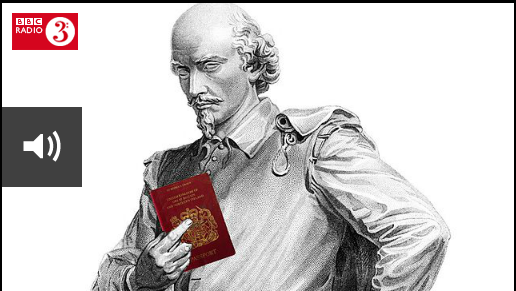
Most people ask me how I stumbled across such an interesting field of research so I thought I'd base my blog today on my relationship with Shakespeare and Bollywood. Before I do, however, here's a link to an episode of The Essay by Poonam Trivedi - the person directly responsible for my interest in Shakespeare and Bollywood - on BBC Radio Three.


My curiosity about the topic of Shakespeare and Bollywood was initiated on reading Dr. Poonam Trivedi's articles on the subject as an MA student at Royal Holloway, University of London in 2006. I delivered a paper at Royal Holloway in class on Maqbool (2004) which led to me eventually choosing to explore the topic further in my MA dissertation. I had seen Vishal Bhardwaj's Maqbool and then Omkara in 2006 on the big screen immediately after their release and was impressed with the ability of a commercial film maker in Bollywood (and I say this with all the baggage of a Bengali, educated in a convent school and college where drama is a serious preoccupation, nurturing a secret love of all things Bollywood) to so adroitly adapt two plays of Shakespeare which most English educated students study in the course of their education. Shakespeare is part of most school and college curricula in India and Indians tend to think of it as an academic topic, of interest to a niche category of English educated elite, and therefore not suitable for Bollywood. And yet, Maqbool and Omkara achieved critical and commercial success, thereby sparking the trend of Bollywoodizing Shakespeare in the industry at present. For me it meant a merging of my high culture passion for Shakespeare with my low culture interest in Bollywood.


Bhardwaj's films led me on a quest for further adaptations of Shakespeare in Bollywood and I encountered films like The Shakespeare Wallah (1965) and Angoor (1982). Not only did I watch several recognisable and acknowledged adaptations over the course of the years, but I also began to watch Bollywood films with an eye to discovering not-so-obvious Shakespearean influences such as the balcony scene in 1942 A Love Story (1994) and the image of a boat named Much Ado in Dil Chahta Hain (2001). It became a bit of an obsession and is no doubt encouraged by my sister's incredible memory for details in any Bollywood film she watches. She remembers every common trope from every possible movie she has ever watched which, combined with my obsessive habit of making lists, helped me to see emerging links, patterns and influences. I am convinced that most of these patterns and influences are deeply embedded in the very idiom of Bollywood, their roots often forgotten or unrecognisable from other sources that were used by the precursor of the Bollywood industry - Parsi theatre.


Bollywood is busy adapting Shakespeare now with three adaptations of Hamlet in the pipeline and two of The Comedy of Errors. Theatre groups like Phizzical and The Company Theatre are producing 'Bollywood adaptations of Shakespeare'. The topic is generating a lot of interest in academic circles as well. The first book devoted exclusively to Shakespeare and Bollywood was published last month (http://www.amazon.co.uk/Bollywood-Shakespeares-Reproducing-Shakespeare-Dionne/dp/1137386126). I am organising a conference in London in June this year to bring together researchers in this field of study. We have people coming in from New York, India, Ireland and different parts of the UK and Dr. Poonam Trivedi is our keynote speaker. Which sorts of brings me full circle!